Indoor Cat Enrichment Ideas: DIY Toys & Play Routine
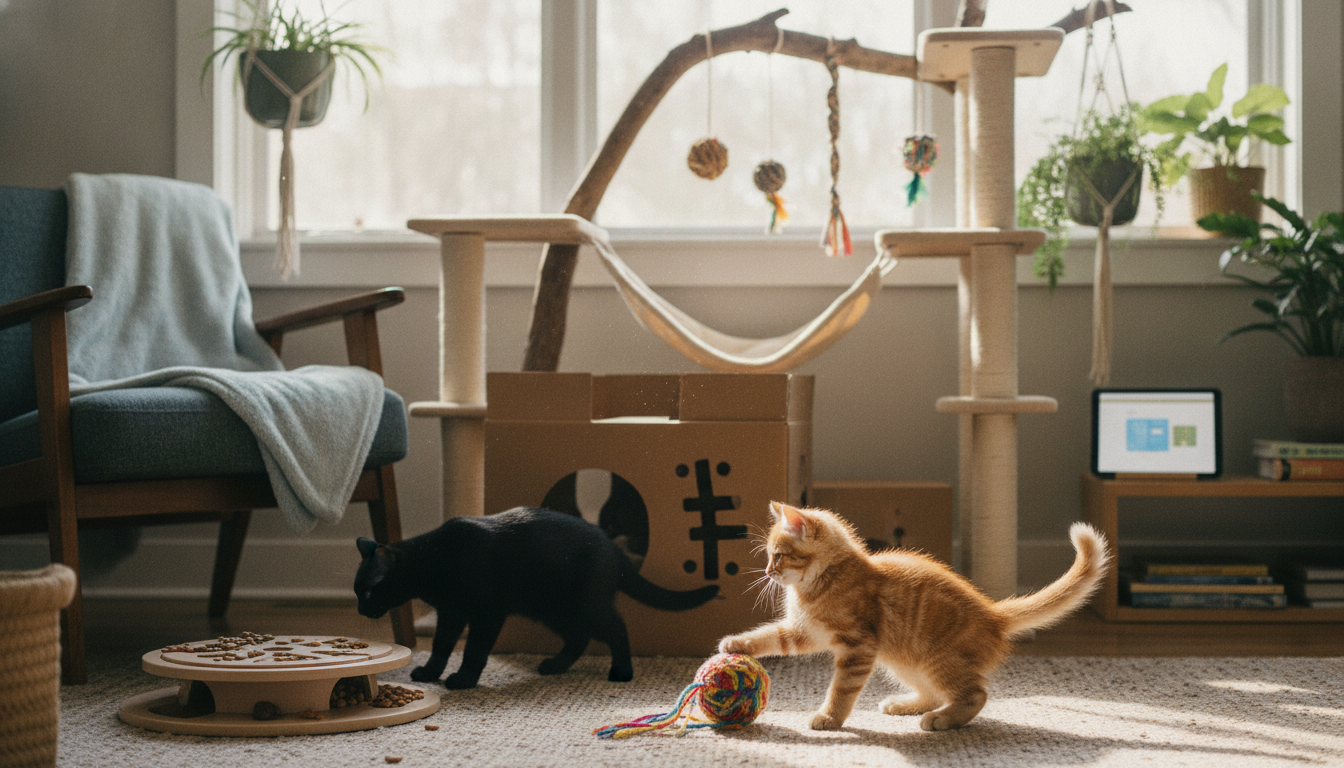
Indoor cats thrive when their day includes hunting-style play, choice of cozy resting spots, and small challenges that engage the brain and body. The ideas below focus on safe, low-cost enrichment that fits real homes—plus an optional printable guide to make routines easy to follow and share with everyone in the household.
What “enrichment” means for an indoor cat
Enrichment is anything that supports normal cat behaviors in a safe, indoor-friendly way. Instead of “more stuff,” think “more opportunities” to do what cats are built to do.
- Meet core needs: hunt, climb, scratch, hide, observe, and rest without being disturbed.
- Blend body and brain work: chasing and pouncing plus puzzles, sniffing, and problem-solving.
- Offer choice and control: multiple paths, perches, and “yes zones” reduce stress and conflict.
- Keep novelty gentle: rotate a few items weekly instead of adding everything at once.
For science-based guidance on environmental needs, see the American Association of Feline Practitioners (AAFP) Feline Environmental Needs Guidelines.
A simple daily play routine that mimics the hunt
Most indoor cats do best with short, predictable bursts of play that match the natural hunt cycle. Think “mini-hunts” rather than marathon workouts.
- Aim for 2–3 sessions daily (5–10 minutes each) instead of one long session.
- Follow the sequence: stalk → chase → pounce → “catch” → eat → groom → rest.
- Let your cat win: end by allowing a capture, then offer a small meal or a few treats.
- Adjust intensity by age: kittens enjoy frequent bursts; seniors often prefer slower, shorter play.
- Pause early if overstimulated: tail lashing, skin twitching, or sudden biting means it’s time to reset.
Sample 7-Day Indoor Cat Enrichment Schedule
| Day | 5–10 Minute Play | Brain/Foraging | Home Setup Refresh |
|---|---|---|---|
| Mon | Wand toy with ground-level “hide and pounce” | Treats scattered in 2 rooms | Move a perch to face a window |
| Tue | Ball track or crinkle ball chase | Paper bag “sniff station” (no handles) | Add a cardboard scratch pad |
| Wed | Feather toy up-and-down for climbers | DIY food puzzle (egg carton) | Rotate one toy out, one in |
| Thu | Laser used safely (finish with a toy catch) | Kibble in a slow feeder | New blanket on a favorite bed |
| Fri | Ribbon/streamer (supervised) “prey” drag | Clicker basics: touch/come | Add a box tunnel path |
| Sat | Fetch practice with soft toy | Lick mat or food smear on plate | Cat grass/catnip refresh |
| Sun | Gentle chase + “catch” reps | Puzzle feeder round 2 | Quiet day: extra hiding spots |
If consistency is tough across a busy household, a simple checklist helps. Printable Cat Enrichment Guide: DIY toys, play routines, and cat-friendly home tips is an easy way to keep play sessions and rotations on track.
DIY toys and activities using items already at home
Many cats prefer “cheap and cheerful” toys, especially when they move like prey. Use safe materials, supervise early, and discard anything that starts to shred.
- Box maze: connect 2–3 boxes with doorway cutouts; add crinkle paper “prey” inside.
- Sock kicker: stuff a clean sock with fabric scraps; tie off securely (no loose strings).
- Paper towel roll puzzle: fold ends and poke small holes for treats; supervise and discard if shredded.
- Toilet paper roll “treat rain”: cut short rings, nest them, and hide treats between layers.
- Ice cube “fish”: freeze a few treats in water (best for cats that enjoy licking or pawing water).
For additional enrichment examples and safety tips, the ASPCA’s guide to enriching your cat’s life is a helpful reference.
Food enrichment that doesn’t add extra calories
Food puzzles and foraging games can be one of the most effective ways to reduce boredom—especially for cats who wake you early or seem restless at night. The key is to use the calories you already feed.
- Swap, don’t add: use part of the daily meal in puzzle feeders instead of adding extra treats.
- Try “hunt meals”: place small portions in 3–6 spots to encourage movement.
- Add sniffing challenges: hide kibble behind a chair leg, under a mat edge, or inside a handle-free paper bag.
- Slow down wet food: spread it thinly on a plate or lick mat for soothing, longer-lasting licking behavior.
- Prevent frustration: start easy, then increase difficulty only after consistent success.
Cat-friendly home tips: vertical space, scratching, and safe “yes zones”
Home setup matters as much as toys. A good environment gives your cat options: up/down, open/hidden, social/quiet. That choice reduces stress and helps prevent unwanted behaviors.
- Vertical routes: use cat trees, shelves, sturdy furniture “stepping stones,” and window perches.
- Scratching variety: offer both vertical and horizontal scratchers near sleeping spots and room entrances.
- Resting security: provide at least one quiet hideaway per cat plus an elevated lookout.
- Sensory enrichment: bird-watching window views, gentle music, or a rotating selection of toys.
- Reduce stressors in multi-cat homes: separate key resources (food, water, litter, beds) to prevent guarding.
For a deeper look at how cats use space and why predictability matters, International Cat Care’s environmental enrichment overview is a solid resource.
A printable guide for consistency (and calmer days)
For a ready-to-use schedule and rotation checklist, keep a copy of Enrichment Ideas for Indoor Cats | Printable Cat Enrichment Guide where everyone can find it.
If you like having household routines in one place, a general planning resource like the Minimalist Travel Packing Planner | Digital Packing Guide for Light, Smart & Stress-Free Trips can also help organize pet-sitter notes and “who does what when” checklists.
FAQ
How do I create enrichment for my cat?
Combine short hunting-style play sessions (5–10 minutes, 2–3 times per day), easy food puzzles using part of meals, and a home setup with vertical perches, scratchers, and quiet hiding spots. Rotate activities weekly and keep difficulty low enough that success is frequent.











Leave a comment